
The 10 Most Commonly Replaced Parts on Freightliner Cascadia Trucks
Keeping Your Freightliner Cascadia on the Road: 10 Parts Every Truck Owner Should Know
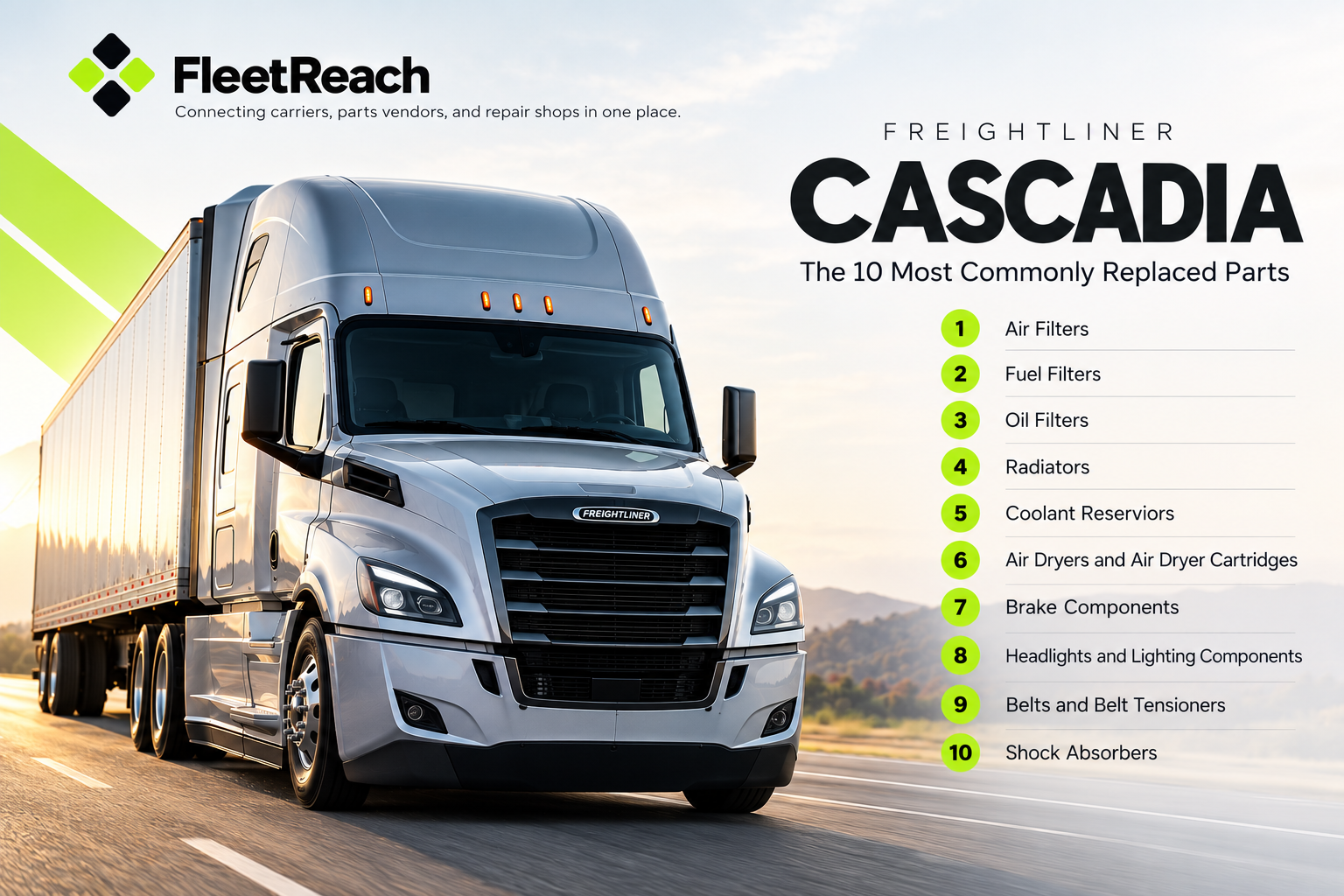
The Freightliner Cascadia is one of the most recognizable heavy-duty trucks on American highways. Designed for long-haul transportation, it is built to handle demanding workloads and thousands of miles of travel.
But even a dependable truck requires regular maintenance and replacement parts.
From engine filters to cooling system components, knowing which parts commonly wear out or fail can help truck owners, fleet managers, and repair shops plan maintenance, reduce unexpected downtime, and avoid costly breakdowns.
Here are 10 commonly replaced and serviced parts on Freightliner Cascadia trucks, along with the warning signs to watch for.
Note: This is a practical maintenance guide, not a statistical ranking of replacement frequency. Actual replacement needs vary by model year, engine, mileage, operating conditions, and maintenance history.
1. Air Filters
Air filters protect the engine by preventing dust, dirt, and other contaminants from entering the intake system.
Over time, accumulated debris can restrict airflow and affect engine performance.
Common warning signs:
- Reduced engine performance
- Increased fuel consumption
- Restricted airflow warnings
- A dirty or damaged filter element
Maintenance tip: Follow the manufacturer's air filter restriction indicators and service recommendations. Replacing an air filter too frequently or incorrectly can introduce contaminants into the intake system.
2. Fuel Filters
Fuel filters help remove contaminants and water from diesel fuel before it reaches sensitive fuel system components.
Clogged filters can restrict fuel flow and contribute to poor engine performance.
Common warning signs:
- Difficulty starting
- Loss of engine power
- Engine hesitation
- Fuel system restriction warnings
Maintenance tip: Replace fuel filters according to the applicable engine maintenance schedule and use filters that meet the engine manufacturer's specifications.
3. Oil Filters
Engine oil filters remove contaminants from circulating engine oil, helping protect internal components from premature wear.
Because heavy-duty diesel engines operate under demanding conditions, proper oil filtration is essential.
Common warning signs:
- Abnormal oil pressure readings
- Oil leaks around the filter housing
- Evidence of oil contamination
Maintenance tip: Replace oil filters during scheduled oil changes. Follow the engine manufacturer's recommended oil type and service interval.
4. Radiators
The radiator plays a critical role in maintaining proper engine operating temperature.
Over time, radiators may develop leaks, corrosion, clogged passages, or physical damage.
Common warning signs:
- Engine overheating
- Coolant leaking beneath the truck
- Repeated coolant loss
- Visible damage to the radiator
Maintenance tip: Inspect the cooling system regularly, including hoses, clamps, coolant condition, and radiator connections. Diagnose the cause of overheating before replacing the radiator.
5. Coolant Reservoirs
The coolant reservoir, also called the coolant surge tank on many heavy-duty trucks, helps manage coolant expansion and maintain proper cooling system operation.
Plastic reservoirs can deteriorate over time due to heat, pressure cycles, and aging.
Common warning signs:
- Cracks in the reservoir
- Coolant leaks
- Low coolant warnings
- Damaged caps or fittings
Maintenance tip: Inspect the reservoir and pressure cap for leaks and damage. Always allow the cooling system to cool before opening the cap.
6. Air Dryers and Air Dryer Cartridges
Freightliner Cascadia trucks use compressed air for essential systems, including air brakes.
The air dryer helps remove moisture and certain contaminants from compressed air, reducing the risk of corrosion and freezing in the air system.
Common warning signs:
- Excessive moisture in air tanks
- Unusual air dryer cycling
- Air leaks around the dryer assembly
- Air pressure buildup problems
Maintenance tip: Follow the manufacturer's cartridge replacement recommendations. If an air dryer repeatedly fails, inspect the compressor, air governor, purge valve, and air system for underlying problems rather than simply replacing the dryer again.
7. Brake Components
Brake components are among the most important safety-related parts on any commercial truck.
Depending on the Cascadia's brake configuration, serviceable components may include brake pads, shoes, drums, rotors, and related hardware.
Common warning signs:
- Reduced braking performance
- Unusual noises during braking
- Uneven brake wear
- Excessive vibration
- Visible component damage
Maintenance tip: Have brake components inspected and serviced by qualified technicians. Always use parts that meet the vehicle's braking system requirements.
8. Headlights and Lighting Components
Commercial trucks depend on properly functioning lighting for visibility, safety, and regulatory compliance.
Headlight assemblies, bulbs, LED modules, and other lighting components may require replacement due to damage, electrical problems, or aging.
Common warning signs:
- Dim or flickering lights
- Headlights not functioning
- Moisture inside the housing
- Cracked lenses or damaged mounting brackets
Maintenance tip: Check headlights, turn signals, brake lights, and marker lights during routine pre-trip inspections.
9. Belts and Belt Tensioners
Engine accessory drive belts operate components such as the alternator and other engine accessories, depending on the engine configuration.
Belts and tensioners experience continuous movement, heat, and vibration.
Common warning signs:
- Squealing or chirping noises
- Visible cracks or fraying
- Abnormal belt movement
- Worn or noisy tensioner bearings
Maintenance tip: Inspect belts, pulleys, and tensioners together. A new belt may fail prematurely if a worn pulley or tensioner is not addressed.
10. Shock Absorbers
Shock absorbers help control suspension movement and improve vehicle stability, handling, and ride comfort.
Over time, heavy loads and road conditions can contribute to wear.
Common warning signs:
- Excessive bouncing
- Uneven tire wear
- Reduced ride stability
- Visible fluid leaks from shock absorbers
Maintenance tip: Inspect shocks as part of routine suspension maintenance. Check related components, including bushings, mounts, and tires.
How to Choose the Right Replacement Parts for Your Freightliner Cascadia
Finding a replacement part is only half the job. Choosing the correct part is just as important.
Before purchasing, consider these five factors:
1. Verify compatibility using your VIN.
Freightliner Cascadia trucks have different configurations depending on model year, engine, and equipment specifications. Always verify the replacement part using your vehicle identification number (VIN) and the applicable OEM part number.
2. Compare OEM and aftermarket options.
OEM parts are manufactured for the original equipment brand's specifications. Quality aftermarket parts can offer competitive pricing and reliable performance when sourced from reputable manufacturers.
3. Check warranty coverage.
Compare warranty terms, exclusions, and return policies before purchasing.
4. Confirm availability and delivery options.
When a truck is out of service, local inventory and fast delivery can be just as important as the purchase price.
5. Buy from reputable suppliers.
Look for established truck parts vendors that provide accurate product information, clear warranty policies, and knowledgeable customer support.
Why Finding the Right Truck Parts Supplier Matters
A truck breakdown doesn't just create a repair bill. It can also mean missed deliveries, disrupted schedules, and lost revenue.
For fleet managers and owner-operators, reducing downtime starts with having access to dependable parts suppliers and repair services.
However, not every quality truck parts store has a strong online presence. Smaller local suppliers may carry the parts you need but can be difficult to discover through a general online search.
That's where FleetReach.ai comes in.
Find Freightliner Cascadia Parts with FleetReach.ai
FleetReach connects truck owners, fleet managers, and repair shops with truck parts vendors and service providers.
Instead of spending hours searching for suppliers, FleetReach helps you:
- Discover truck parts vendors in your area
- Explore participating vendors' product listings
- Find suppliers specializing in heavy-duty truck parts
- Contact vendors directly for pricing and availability
- Discover truck repair and roadside service providers
Whether you're searching for a Freightliner Cascadia radiator, coolant reservoir, air dryer, headlight, or other replacement component, FleetReach is designed to make finding the right supplier easier.
Less Searching. Less Downtime. More Miles.
Explore truck parts vendors and repair services at www.FleetReach.ai.
Frequently Asked Questions
What parts are commonly replaced on Freightliner Cascadia trucks?
Common maintenance and replacement items include engine filters, brake components, belts, lighting components, and air dryer cartridges. Radiators, coolant reservoirs, shock absorbers, and other components may also require replacement as trucks age or develop problems.
How often should I replace my Freightliner Cascadia air dryer cartridge?
Replacement intervals depend on the air dryer manufacturer, vehicle application, duty cycle, and operating conditions. Consult the applicable maintenance manual rather than relying on one universal interval.
Are aftermarket parts reliable for Freightliner Cascadia trucks?
Quality aftermarket parts can be reliable when they meet the vehicle's specifications and come from reputable manufacturers. Always verify compatibility, quality, and warranty coverage.
Can I use my VIN to find the correct Freightliner Cascadia parts?
Yes. Your VIN helps identify the vehicle's original configuration and can assist suppliers in confirming compatible parts. Some components may also require additional information, such as engine serial numbers or original part numbers.
Where can I find Freightliner Cascadia parts near me?
You can contact local heavy-duty truck parts stores, authorized dealerships, or use specialized vendor directories such as FleetReach.ai to discover suppliers and inquire about availability.